


Read more:
MOEA of Taiwan Announces 2026 FIT Rates for Renewable Energy, Encouraging Greater Industry Investment
2026/01/06

Taiwan's Ministry of Economic Affairs (MOEA) announced the 2026 Feed-in Tariff (FIT) rates for renewable energy on January 2. Following evaluation of public feedback by the Rate Review Committee, the finalized rates aim to continue promoting renewable energy deployment and provide stronger investment incentives for industry players.
MOEA stated that the new rates focus on sustaining development momentum while adjusting mechanisms to reflect practical conditions. For rooftop solar photovoltaic (PV) systems, FIT rates range from NT$3.62 to NT$5.62 per kilowatt-hour (kWh) depending on installed capacity. Ground-mounted systems are set at NT$3.50 per kWh, while floating solar systems are priced at approximately NT$3.89 per kWh. The new framework introduces a repowering mechanism for the first time, encouraging upgrades of aging equipment to enhance generation efficiency.
For other renewable energy sources, onshore wind power, systems under 30 kilowatts (kW) receive NT$7.41 per kWh, while systems of 30 kW and above are priced at NT$2.09 to NT$2.12 per kWh. Geothermal power maintains a tiered tariff structure, with conventional geothermal systems reaching up to NT$7.24 per kWh for the first 10 years, while next-generation geothermal systems command as high as NT$8.55 per kWh. Biomass, waste-to-energy, small hydropower, and ocean energy also have corresponding purchase rates to maintain investment incentives.
This content was published on WindTAIWAN and is shared in collaboration with ENERGYNIPPON.

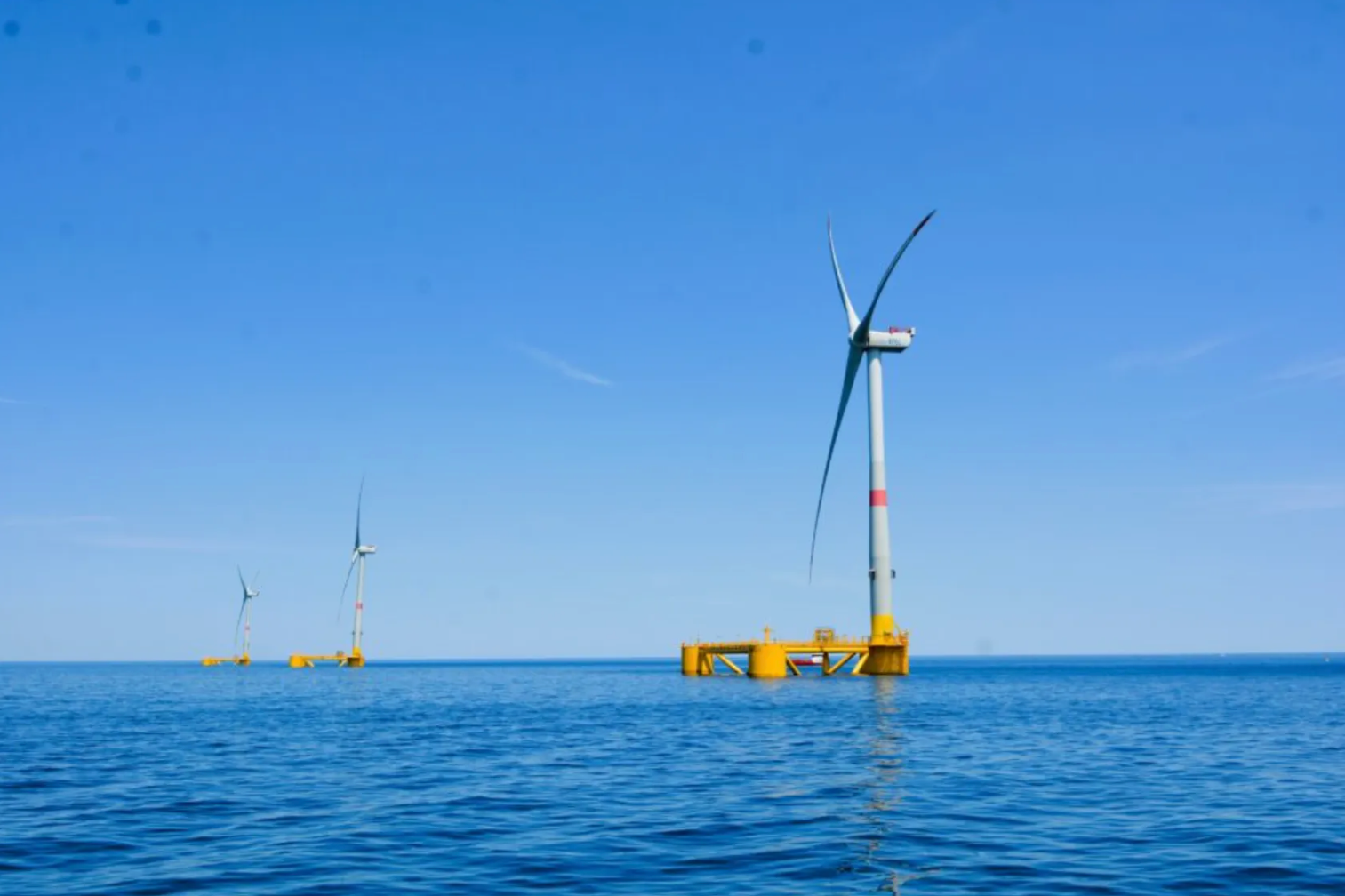
Ocean Winds’ 30 MW EFGL floating wind farm reaches full power off France, advancing commercial-scale offshore wind development in the Mediterranean.
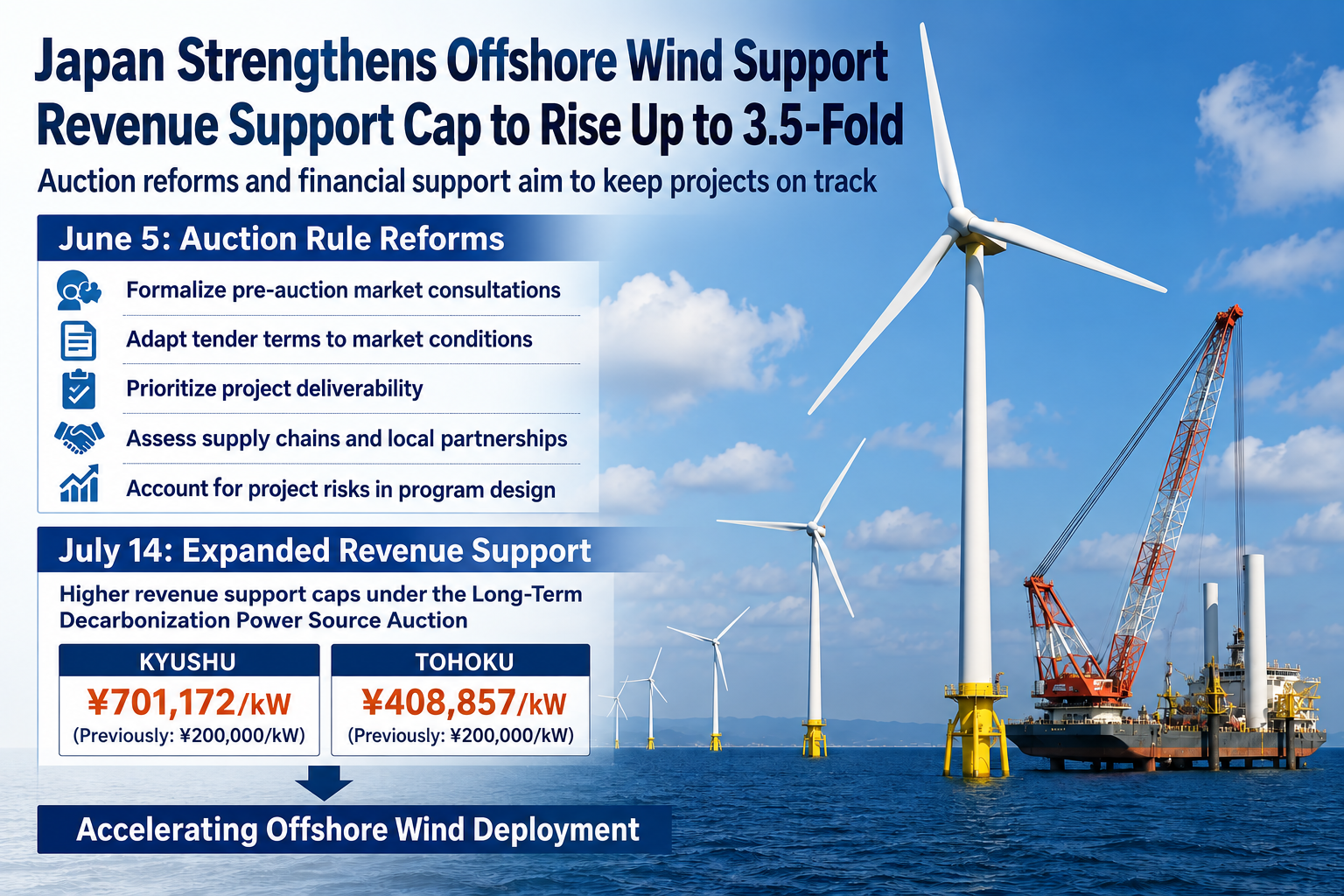
Japan plans to raise offshore wind revenue support caps to 3.5 times previous levels, complementing auction reforms aimed at improving project viability.
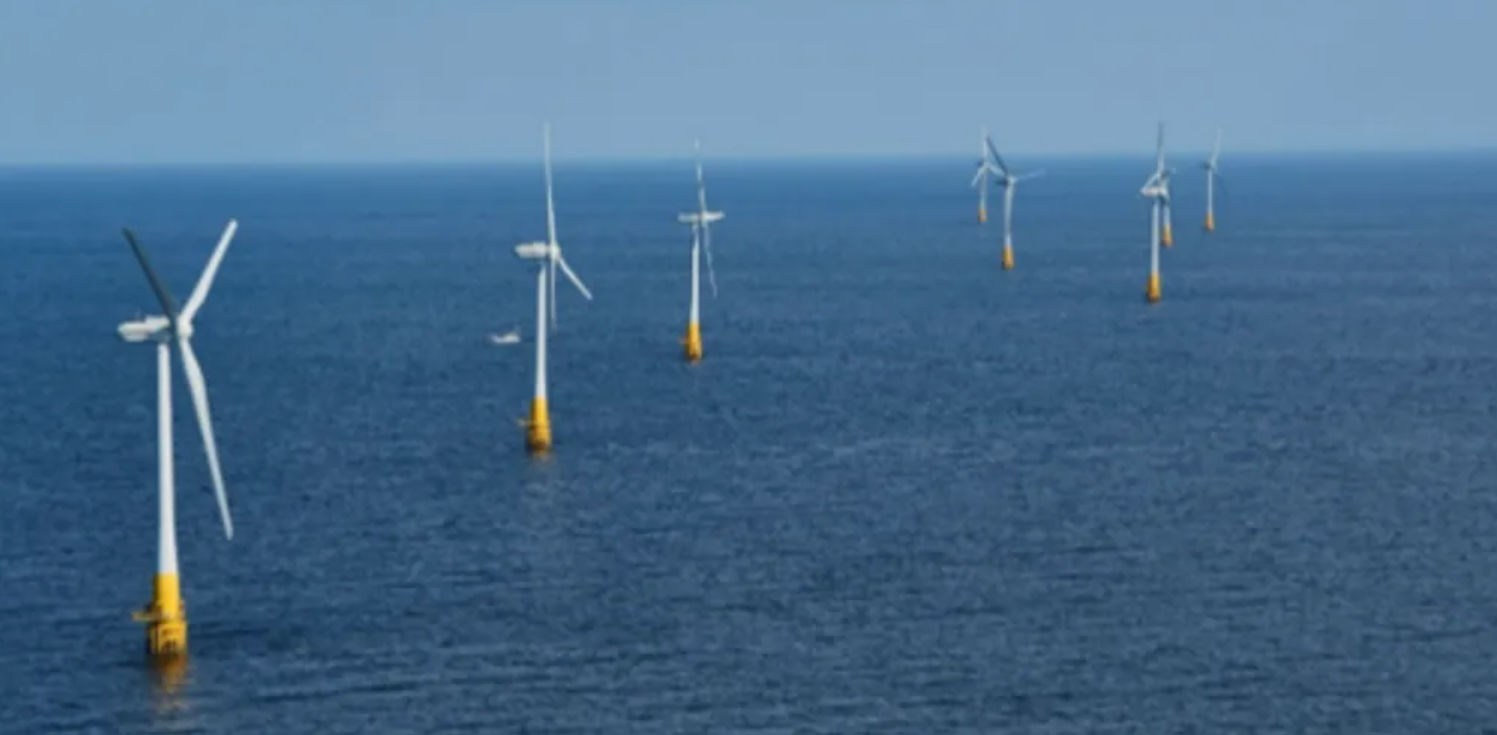
Japan plans floating offshore wind trials in waters deeper than 500 meters to cut costs, advance technology and support expansion into Asia-Pacific markets.