Japan’s Toyo Construction Takes Delivery of ¥30 Billion Cable-Laying Vessel for Offshore Wind Push
2026/7/3
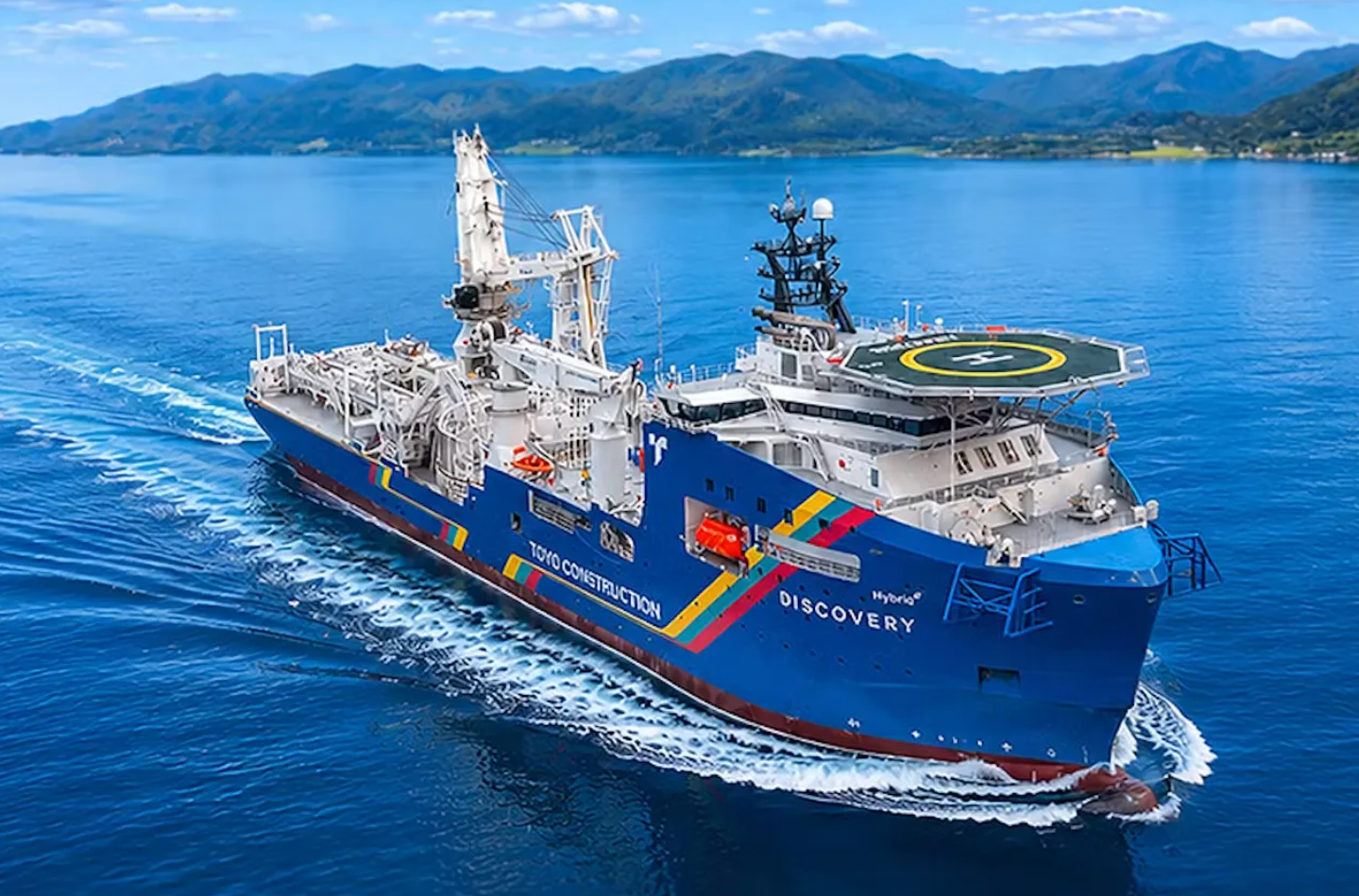
Self-propelled cable-laying vessel DISCOVERY
Japan’s Toyo Construction has taken delivery of DISCOVERY, one of the country’s largest self-propelled cable-laying vessels, as the contractor steps up investment in offshore wind construction capacity amid growing demand for domestic marine infrastructure.
The vessel was handed over on June 26 at a shipyard operated by Norwegian shipbuilder VARD. Built at a cost of approximately ¥30 billion ($200 million), DISCOVERY has a gross tonnage of around 19,000 tonnes, an overall length of approximately 150 metres and a beam of 28 metres.
The investment forms part of Toyo Construction’s strategy to strengthen its offshore construction capabilities as Japan seeks to expand offshore wind deployment and reduce its reliance on overseas installation vessels.
DISCOVERY is primarily designed to install subsea power cables connecting offshore wind farms to onshore transmission networks. Following an approximately three-month voyage to Japan and final commissioning work, the vessel is scheduled to begin operations on October 1, with Ishikari Bay New Port in Hokkaido serving as its home port.
Strengthening Japan’s Offshore Wind Supply Chain
Japan has relatively few domestically owned high-specification cable-laying vessels, making subsea cable installation one of the more constrained areas of the country's offshore wind supply chain.
By owning and operating DISCOVERY, Toyo Construction aims to secure greater control over installation capacity while positioning itself to capture growing demand for offshore wind and other marine infrastructure projects.
The vessel is equipped with cable tanks offering a combined capacity of 9,000 tonnes, allowing it to carry large volumes of subsea cable in a single campaign.
It also features a DP Class 2 dynamic positioning system, enabling the vessel to maintain its position with high precision during offshore operations even under challenging wave, wind and current conditions.
DISCOVERY has been designed to switch between cable-laying and construction configurations, broadening its potential applications beyond conventional offshore wind projects.
Toyo Construction said the vessel could in the future be deployed for work related to floating offshore wind mooring systems and high-voltage direct current (HVDC) subsea transmission infrastructure, both of which are expected to become increasingly important as offshore renewable energy projects move farther from shore and into deeper waters.
The vessel is also equipped with a removable cable-laying system and two offshore cranes, allowing it to support a wider range of marine construction activities.
Built for Japan’s Offshore Market
At the handover ceremony, Toyo Construction President Tatsuyoshi Nakamura said the company would continue preparations for the vessel’s full-scale deployment in Japan while seeking to create long-term value for customers, business partners and society.
VARD described DISCOVERY as one of the largest cable-laying vessels built for the Japanese market, noting that it had been constructed to comply with Japanese classification and flag-state requirements.
The vessel's flexible configuration reflects expectations that Japan’s offshore construction market will expand beyond fixed-bottom wind farms to include floating wind, subsea transmission networks and other large-scale offshore infrastructure.
Toyo Construction, traditionally focused on port and marine civil engineering, became a wholly owned subsidiary of Taisei Corporation following the completion of a tender offer in 2025.
Taisei has identified offshore wind as a strategic growth area, and the addition of DISCOVERY is expected to strengthen the group’s marine engineering and offshore construction capabilities.
Strategic Investment as Japan Targets Offshore Wind Expansion
Japan has set a target of developing 30–45 GW of offshore wind capacity by 2040, but the sector continues to face challenges including rising construction costs, limited domestic supply-chain capacity and shortages of specialised vessels and personnel.
Subsea cable installation is particularly dependent on specialised equipment and expertise, with Japanese projects historically relying in part on foreign vessels and contractors.
Against this backdrop, the introduction of DISCOVERY represents more than an expansion of Toyo Construction’s fleet. It is a strategic investment aimed at securing scarce domestic offshore construction resources as Japan seeks to build a more resilient offshore wind supply chain.
Demand for high-specification cable-laying and construction vessels could rise further as Japan moves toward larger fixed-bottom projects, commercial-scale floating offshore wind development and the expansion of offshore HVDC transmission networks.
The ability of Japanese contractors to develop and retain such construction capacity domestically is therefore likely to become an increasingly important factor in the country’s efforts to scale up offshore wind deployment.
Sources: NIKKEI, Toyo Construction