Taiwan’s Floating Wind Push Hinges on Policy, Technology and Supply Chains, ABS Says
2026/10/16
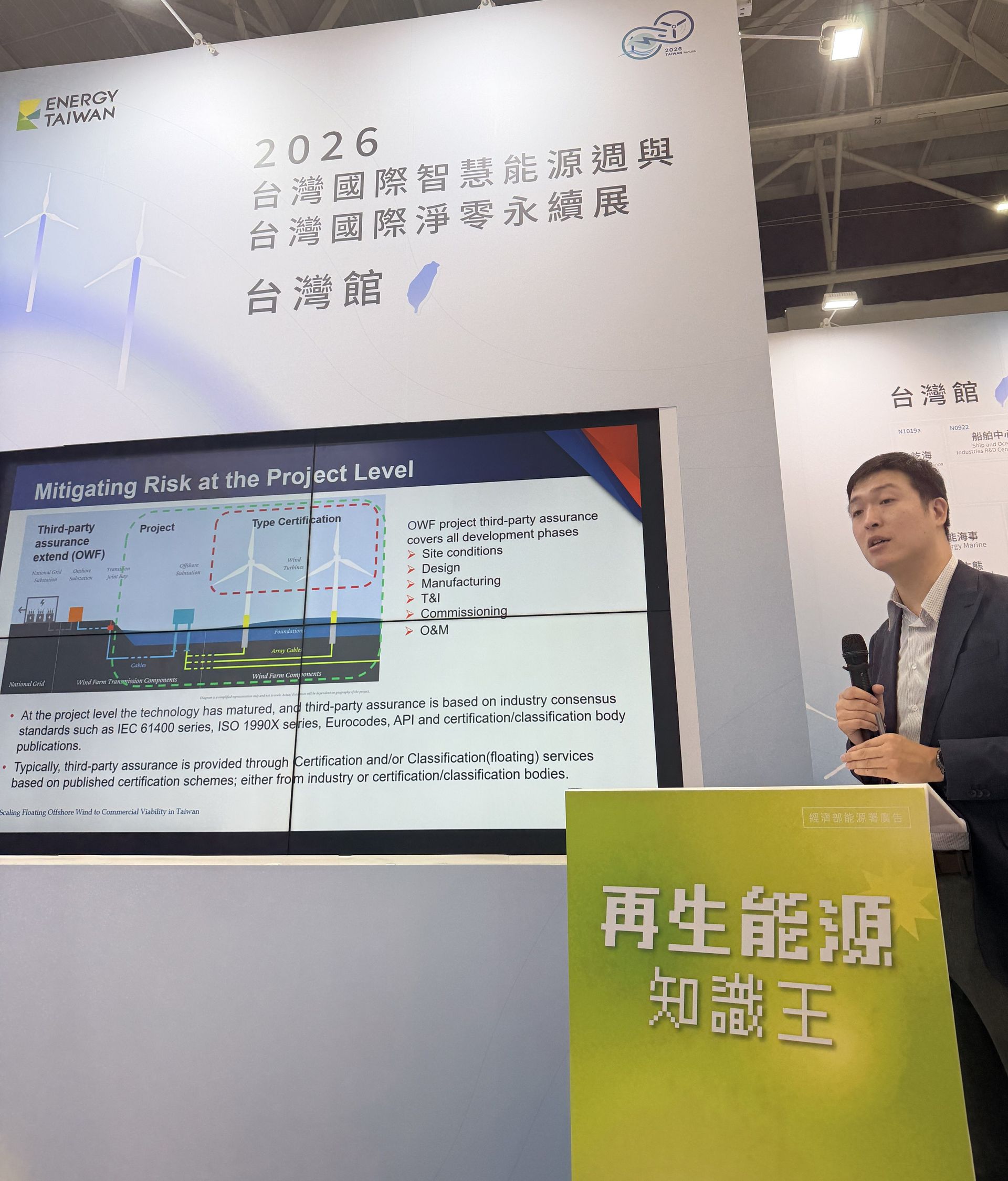
TAIPEI — Taiwan needs sustained policy support, standardized designs and stronger supply chains to turn its floating offshore wind potential into commercial projects, the American Bureau of Shipping (ABS) said at ENERGY TAIWAN 2026 on October 15.
Speaking at the event’s Taiwan Pavilion, ABS outlined three priorities for commercialization: policy and financial incentives, technology and innovation, and industrialization and supply chain development. Taiwan’s Ship and Ocean Industries R&D Center (SOIC) also presented a simulator designed to help local operators assess towing operations for floating wind platforms.
Taiwan’s deepwater areas offer world-class wind resources, with wind speeds exceeding 10 meters per second, according to Manuel Chang(張中澤), ABS’s Manager of Global Offshore Renewables. Harnessing those resources commercially, however, will require improvements in project bankability and continued government support to establish a steady pipeline of developments.
Standardizing designs will be a key technical priority. On the industrial side, Taiwan needs to upgrade dry docks and storage yards while securing support vessels, including tugboats and service operation vessels (SOVs).
Typhoons and earthquakes add to the challenges facing developers. High generation costs could also translate into higher electricity prices for corporate buyers, while grid and port infrastructure will require government investment, the ABS representative said.
Certification Across the Project Life Cycle
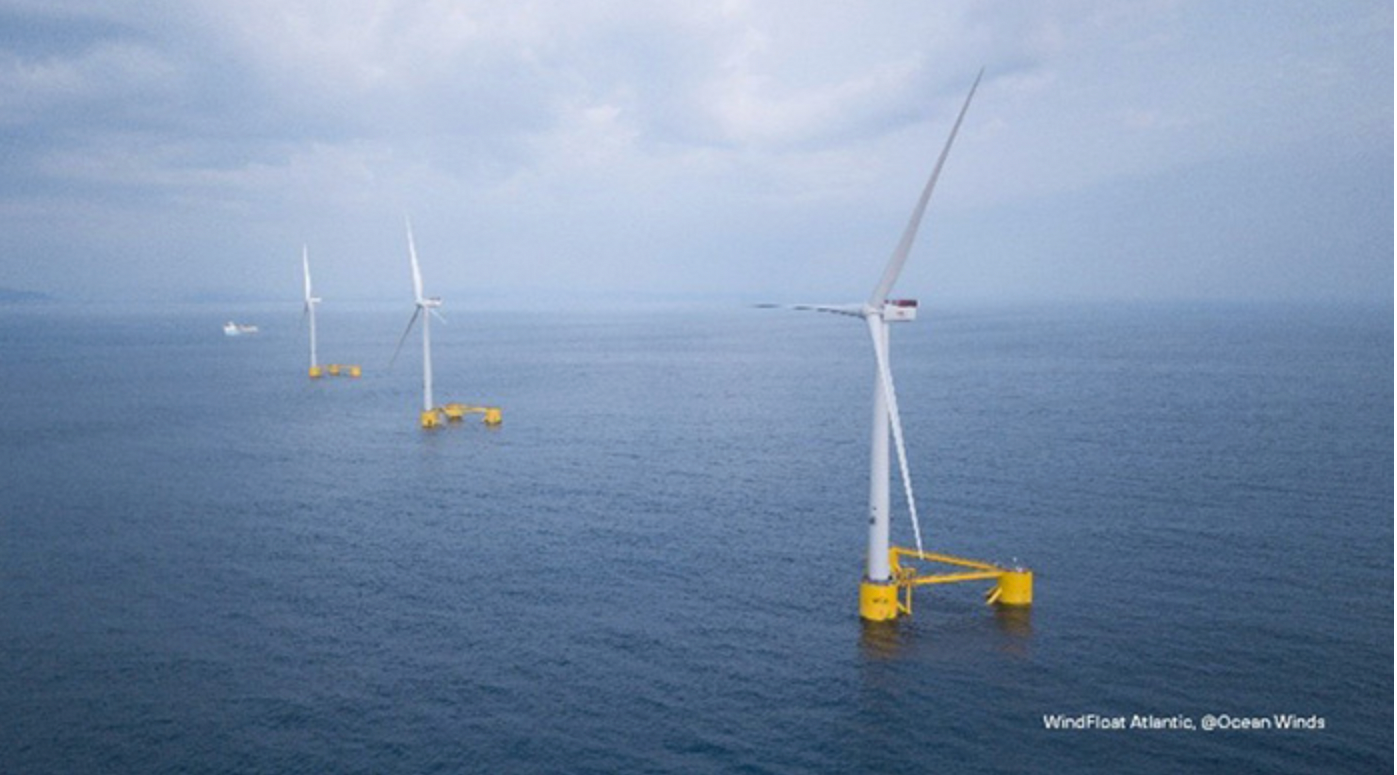
ABS’s experience includes certifying WindFloat 1, the world’s first large-scale semisubmersible floating wind turbine.
For new concepts, approval in principle (AiP) provides an early assessment of technical feasibility. At the project level, third-party verification extends across site conditions, design, manufacturing, transportation and installation, commissioning, and operations and maintenance.
The process provides a framework for assessing risks throughout development and operation as floating wind moves toward commercial deployment.
Simulating Tow-Out Operations
SOIC has expanded its existing ship-handling simulator with a towing module to create a dedicated simulation system for floating wind platforms, according to Dr. C.H. Chung(鍾承憲), a department director at the center.
The system combines dynamic calculations for vessels, towlines and floating platforms to model their movement and maneuvering responses under wind, wave and current conditions.
By allowing Taiwanese operators to evaluate towing operations in advance, the simulator is intended to improve navigational safety and reduce accident risks during the transport of floating wind platforms.