BP in Talks to Exit Yamagata Offshore Wind Project as Japan Faces Test of Investor Confidence
2026/7/7
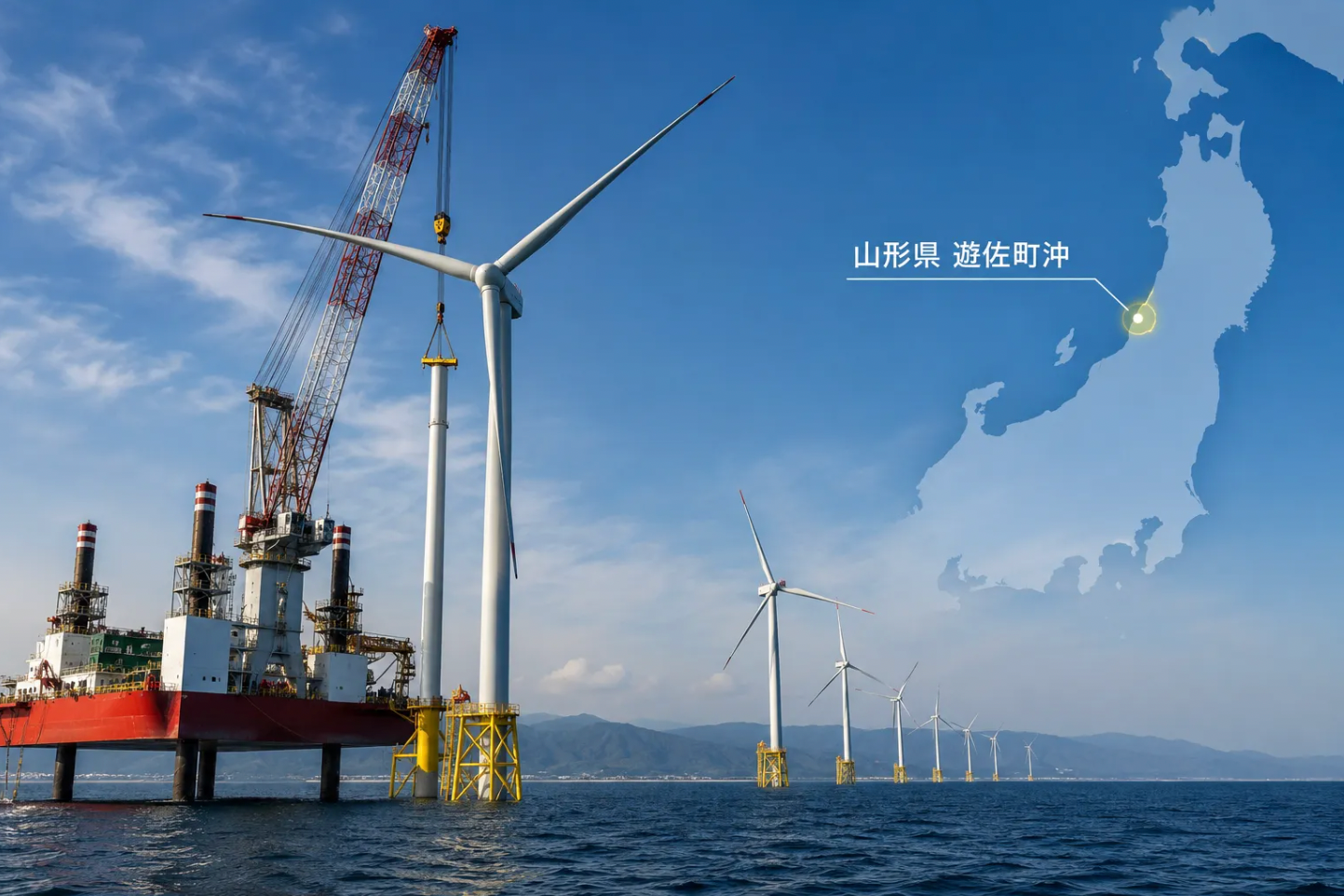
British energy major BP is in talks to withdraw from an offshore wind project off the coast of Yuza, Yamagata Prefecture, in a move that underscores mounting pressure on the economics of Japan’s offshore wind sector and puts renewed focus on the government’s efforts to reform its support framework.
BP is expected to leave the consortium developing the project, which is led by Marubeni and also includes Kansai Electric Power, Tokyo Gas and local construction company Marutaka. The project itself is expected to continue, with the remaining Japanese partners considering adjustments to their ownership stakes.
The Yuza offshore wind project was awarded to the Marubeni-led consortium in December 2024 under Japan’s third round of offshore wind tenders. Commercial operations are scheduled to begin in June 2030.
BP is believed to hold a stake of around 25% in the special-purpose company established to develop the project, making it one of the largest shareholders after Marubeni.
The British energy group combined its offshore wind business with that of Japan’s largest power generator JERA in August 2025, creating the equally owned joint venture JERA Nex bp. The Yamagata project, however, was secured by BP before the integration and has reportedly proved difficult to transfer to the new venture.
That complication is believed to have contributed to BP’s decision to consider withdrawing from the project.
BP has said that no final decision has been made. People familiar with the matter, however, indicate that the company’s stake could be taken over by existing consortium members, including Marubeni, limiting the immediate impact on the project’s development schedule.
Japan’s offshore wind market faces growing pressure
BP’s potential withdrawal comes as Japan’s offshore wind sector grapples with sharply higher construction costs, interest rates and supply-chain expenses that have undermined the economics of projects awarded under earlier tender conditions.
In 2025, a consortium led by Mitsubishi Corporation and Chubu Electric Power decided to withdraw from three offshore wind projects off the coasts of Chiba and Akita prefectures after concluding that rising costs had made the developments economically unviable.
The Japanese government has since decided that the three areas will be offered again through a new tender process.
Norwegian energy major Equinor also announced in June 2026 that it would exit the Japanese offshore wind market. Although the company did not hold a specific development project in Japan, its departure added to concerns over whether the country can continue to attract major international developers and investors.
Of the nine large-scale offshore wind areas awarded by the Japanese government to date, three are already set to be retendered following the Mitsubishi-led consortium’s withdrawal. BP would be the first participant to move toward exiting one of the remaining six awarded projects.
Other European energy groups remain involved in Japanese developments. Spain’s Iberdrola is participating in an ENEOS-linked project off Akita Prefecture, while Germany’s RWE is involved in a Mitsui-led development off Niigata Prefecture.
A broader retreat by overseas investors could increase the capital burden on Japanese developers and raise questions over the financing and long-term viability of future projects.
Europe strengthens support as Japan weighs reform
The deterioration in offshore wind economics is not unique to Japan. Developers in Europe and the United States have also cancelled or delayed projects in recent years as inflation, higher financing costs and supply-chain constraints eroded expected returns.
Governments have responded by adjusting auction frameworks to restore investment incentives. The UK has significantly increased funding available for offshore wind auctions, while Poland has raised ceiling prices in an effort to reflect higher development costs.
The broader trend marks a shift away from frameworks that place most development risk on private investors toward models in which governments assume a greater share of market and construction risk.
Signs of recovery are nevertheless emerging in the global offshore wind sector. Worldwide installed offshore wind capacity is projected to reach around 396 GW by 2034, with Europe accounting for roughly 45% of the total. Projects reaching final investment decision are also expected to recover from around 12 GW in 2025 to approximately 22 GW in 2026.
Japan, meanwhile, is seeking to increase wind power’s share of electricity generation to between 4% and 8% by fiscal 2040, up from 1.1% in fiscal 2023. Achieving that target will require a substantial acceleration in offshore wind deployment, but relatively few large-scale projects have reached commercial operation.
Policy reform becomes a test for investor confidence
The government is now considering changes to the rules governing the retendering of the three areas abandoned by the Mitsubishi-led consortium, alongside possible measures to support projects already awarded under previous auction rounds.
One option under discussion is greater use of Japan’s Long-Term Decarbonization Power Source Auction, a mechanism designed to provide long-term support for investment in low-carbon power generation.
Under the proposed approach, developers could receive stronger support for upfront construction costs while returning a substantial portion of project revenues after operations begin. The aim is to reduce exposure to soaring development costs while preventing excessive returns.
Whether the reforms will be sufficient to restore project economics remains uncertain. Their design — and the speed at which they are implemented — could prove decisive for future investment decisions by both Japanese and international developers.
BP’s move should not necessarily be interpreted as a full withdrawal from the Japanese market. Rather, it appears to reflect a reassessment of an individual project structure and the company’s offshore wind portfolio following the creation of JERA Nex bp.
Even so, the episode highlights a broader challenge facing Japan. International developers are becoming increasingly selective about where they deploy capital, and future Japanese offshore wind auctions will need to demonstrate that projects can generate sustainable returns despite rising costs and execution risks.
For Japan, the outcome of the current policy reforms could therefore become an important test of whether the country can continue to attract international capital and expertise while pursuing its offshore wind ambitions through 2040.