Battery Storage Costs Fall Below Gas-Fired Power for the First Time, Boosting Renewable Energy Deployment
2026/06/18
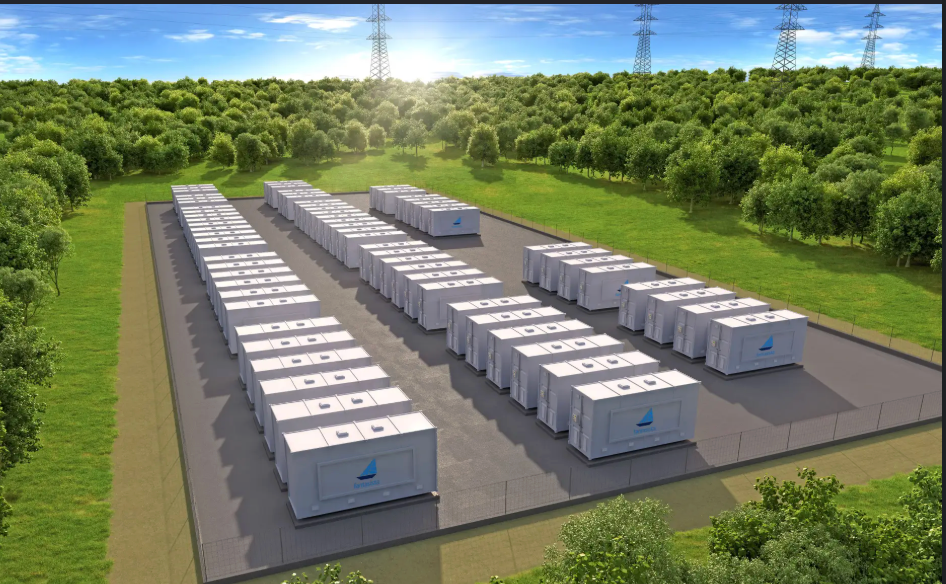
Battery energy storage systems (BESS) have reached a major milestone in the global power sector. According to recent industry analysis, the levelized cost of electricity (LCOE) for battery storage fell below that of gas-fired power generation for the first time in 2025, approaching parity with coal-fired generation.
The shift is largely attributed to a sharp decline in battery prices driven by massive production expansion in China and a slowdown in electric vehicle (EV) demand. At the same time, rising gas turbine costs and higher fuel prices have pushed up the cost of new gas-fired power projects.
As battery storage becomes increasingly affordable, industry observers expect the technology to play an even greater role in supporting renewable energy integration and accelerating global decarbonization efforts.
Battery Storage LCOE Falls to $78/MWh
According to data compiled by BloombergNEF (BNEF), the LCOE of battery storage projects declined 27% year-on-year to US$78 per megawatt-hour (MWh) in 2025. This marks the first time battery storage has become cheaper than gas-fired generation, which recorded an LCOE of US$102/MWh.
Battery storage costs have fallen dramatically over the past five years. In 2020, the LCOE stood at US$185/MWh, meaning costs have dropped by more than half within a relatively short period.
A key driver has been the sharp decline in battery cell prices. Average battery prices fell to approximately US$70 per kilowatt-hour (kWh) in 2025, representing a 45% decrease from the previous year.
China's aggressive expansion of battery manufacturing capacity has been central to this trend. Government support for grid-scale energy storage deployment, combined with large-scale industrial investment, has led to substantial oversupply in the global market, intensifying price competition among manufacturers.
Chinese Manufacturers Strengthen Market Dominance
Data from South Korea-based market research firm SNE Research indicates that Chinese manufacturers accounted for 64% of the global battery storage market in 2025, up significantly from less than 50% in 2020.
Leading companies such as CATL and BYD have expanded their influence not only in the EV battery sector but also in stationary energy storage applications. As growth in global EV sales moderates, battery manufacturers are increasingly redirecting production capacity toward grid-scale storage systems and other energy infrastructure markets.
Industry analysts note that China's battery manufacturing capacity has grown far beyond current EV demand, encouraging suppliers to seek new opportunities in energy storage, data centers, and utility-scale applications.
The trend is also emerging in the United States, where several battery factories originally developed for EV production are being repurposed to supply energy storage systems. Multiple North American facilities are expected to increase production for stationary storage markets over the coming years.
Rising Costs Challenge Gas-Fired Generation
While battery costs continue to decline, gas-fired power generation is moving in the opposite direction.
BNEF estimates that the LCOE of gas-fired power increased by 16% in 2025. One major factor is the rapid growth of electricity demand from AI-focused data centers, which has fueled unprecedented demand for gas turbines.
As utilities and technology companies race to secure power generation capacity, turbine manufacturers have reported growing order backlogs, resulting in longer delivery times and higher project development costs.
Fuel costs are also becoming a concern. Ongoing geopolitical tensions in the Middle East have contributed to upward pressure on crude oil and liquefied natural gas (LNG) prices. Since many LNG supply contracts are linked to oil prices, sustained increases in energy commodity markets could further raise the cost of gas-fired generation in the coming years.
Offshore Wind Remains Costly, Storage Becomes Increasingly Important
Among renewable energy technologies, solar photovoltaics and onshore wind remain the most cost-competitive sources of new electricity generation, with LCOEs of US$39/MWh and US$40/MWh, respectively.
Offshore wind, however, continues to face cost pressures. The technology recorded an LCOE of US$100/MWh in 2025, up 12% year-on-year due to higher financing costs, supply chain constraints, and rising material prices.
Despite these challenges, offshore wind remains a key pillar of long-term decarbonization strategies worldwide.
As renewable generation expands, battery storage is increasingly viewed as essential infrastructure for maintaining grid stability and balancing intermittent power output. Continued declines in battery costs could significantly improve the economics of renewable energy projects and support the transition toward low-carbon power systems.
“Renewables Plus Storage” Is Becoming the New Industry Standard
The cost crossover between battery storage and gas-fired generation represents more than a simple market milestone. It signals a structural shift in the economics of power systems.
For decades, gas-fired plants have served as the primary resource for balancing electricity supply and demand. As battery storage becomes increasingly competitive, however, renewable energy paired with storage is emerging as a viable alternative for delivering reliable and flexible power.
The implications are particularly significant for countries such as Japan, where solar and wind generation continue to expand while grid congestion and renewable curtailment remain key challenges. Lower storage costs could accelerate the deployment of integrated renewable-plus-storage projects and enhance the value of clean energy assets.
At the same time, the growing concentration of battery manufacturing in China raises concerns about supply chain resilience and energy security. Governments in Japan, Europe, and North America are likely to place greater emphasis on diversifying supply sources and strengthening domestic battery industries as the global energy transition advances.