Taiwan Retains Global No. 5 Offshore Wind Ranking as GWEC Lowers 2030 Capacity Forecast
2026/6/26
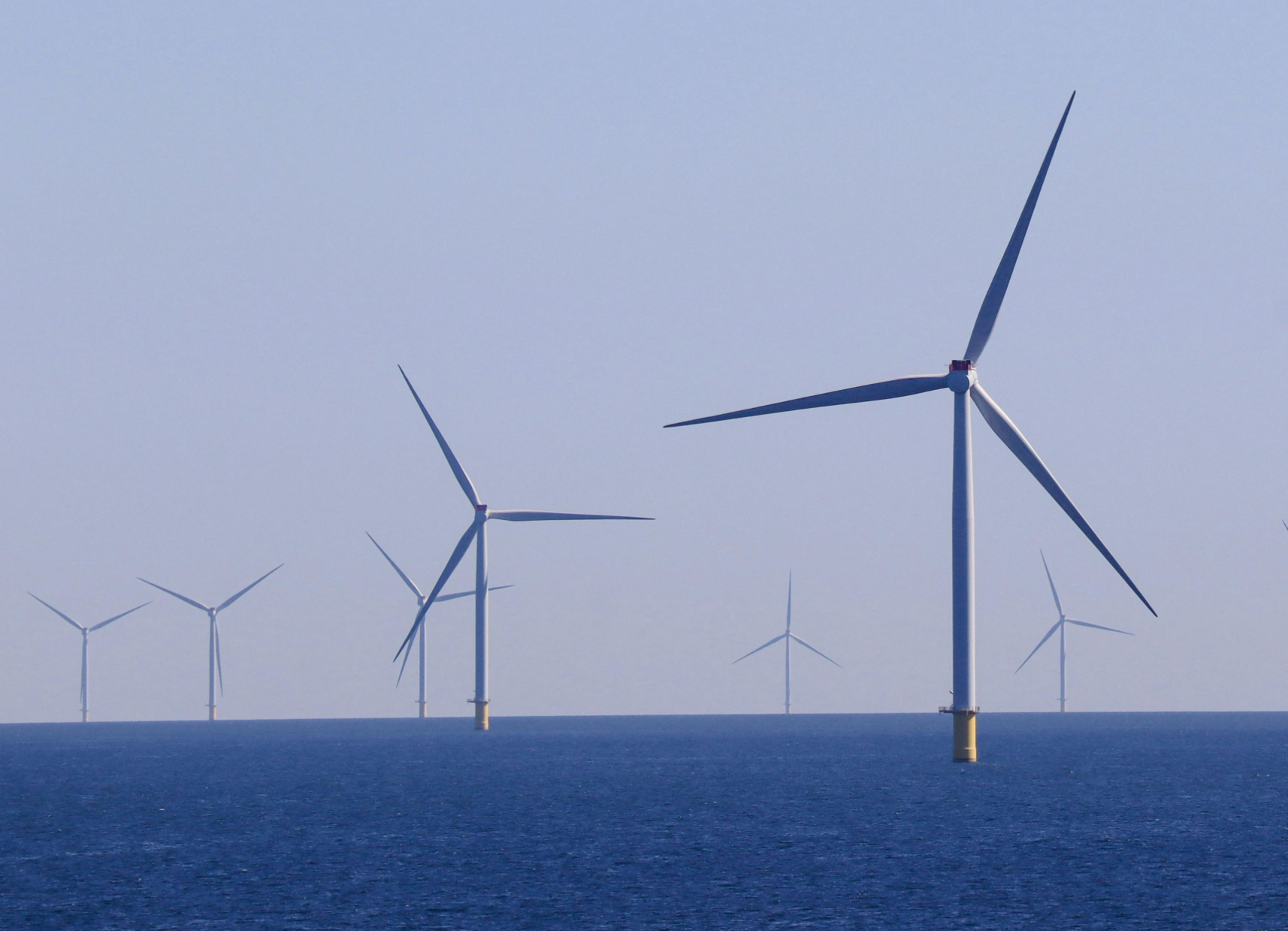
Taiwan has maintained its position as the world's fifth-largest offshore wind market, despite a downward revision to its medium-term deployment outlook, according to the Global Wind Energy Council (GWEC) in its Global Offshore Wind Report 2026.
The report shows that the global offshore wind industry continued to expand in 2025, driven by energy security concerns and decarbonization efforts. A total of 9.3 GW of new offshore wind capacity was commissioned during the year, bringing cumulative global installed capacity to 92.5 GW. The Asia-Pacific region accounted for 58% of global installations, reaffirming its position as the world's largest offshore wind market.
Against this backdrop, Taiwan remained the largest offshore wind market in Asia-Pacific outside mainland China, supported by steady project execution and a stable policy framework. Alongside China, the United Kingdom, Germany and the Netherlands, Taiwan continued to rank among the world's top five offshore wind markets.
According to the report, 600 MW of offshore wind capacity was connected to Taiwan's grid in 2025. The newly commissioned projects included Hai Long 2, Hai Long 3, Greater Changhua 2b, and Greater Changhua 4, lifting the country's cumulative installed offshore wind capacity to 3.6 GW.
The successful commissioning of these large-scale projects has reinforced Taiwan's role as one of the most mature offshore wind markets in the Asia-Pacific region.
However, GWEC has revised downward its outlook for Taiwan's future capacity growth. The organization cited lower-than-expected capacity allocations in Phase 1 and Phase 2 of Round 3 Zonal Development, as well as the withdrawal of several developers from planned projects.
As a result, GWEC reduced its forecast for Taiwan's cumulative offshore wind capacity by 2030 from 13.1 GW to 10.9 GW, while its 2035 projection was lowered from 20.6 GW to 18.3 GW.
Despite the revised outlook, GWEC expects Taiwan, Japan and South Korea to remain the key growth engines for offshore wind development in the Asia-Pacific region outside China.
The report notes that sustaining policy continuity while accelerating investments in grid infrastructure and port facilities will be critical to supporting future project deployment and attracting long-term investment.
------------------------------------------------------------------------------------
Although Taiwan's deployment targets have been revised downward, the market remains the largest offshore wind destination in Asia-Pacific outside China. As the sector transitions from demonstration projects to large-scale commercial deployment, market competitiveness will increasingly depend not only on installed capacity but also on supporting infrastructure, including transmission networks, port capabilities and domestic supply chains.
With Japan continuing to face delays in offshore wind development, Taiwan's experience in policy implementation, project execution and market design offers valuable lessons for policymakers and industry stakeholders across the region. As Asian governments seek to strengthen energy security while expanding renewable generation, Taiwan's offshore wind market is likely to remain an important benchmark for regional development.
This content was published on WindTAIWAN and is shared in collaboration with ENERGYNIPPON.