Vestas, Japanese partners to study wind power workforce training
2026/10/29
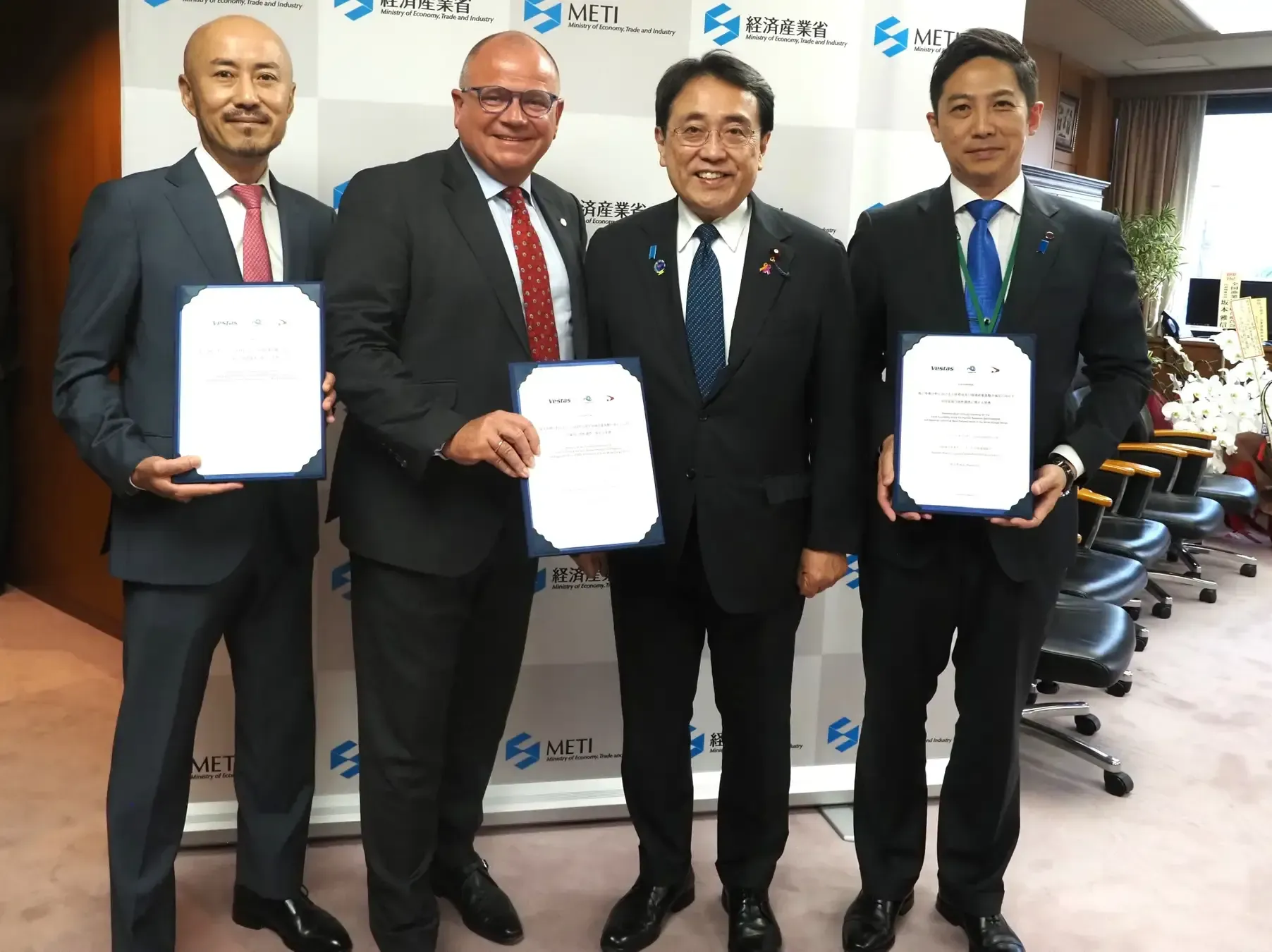
Danish wind turbine maker Vestas said on Oct. 29 it had signed an agreement with a Nagasaki industry group and Akita Prefecture to explore training programs in Japan for workers who build, operate and maintain wind farms.
The memorandum of understanding with the Nagasaki Marine Industry Cluster Promotion Association, known as NaMICPA, and the Akita prefectural government covers a joint feasibility study into developing a domestic training framework, including courses delivered in Japanese.
The partners will assess workforce demand, technical and safety training requirements, and potential cooperation with educational institutions and industry organizations. Vestas said the agreement does not commit the parties to establishing a specific facility or launching training programs in Japan.
The Nikkei newspaper reported on Oct. 29 that a training hub in Nagasaki could be established as early as fiscal 2027 with support from Japan’s Ministry of Economy, Trade and Industry. Studies would also be conducted in Akita, where several offshore wind projects are planned, the newspaper said.
Nagasaki already hosts NOA TRAINING, an offshore wind workforce training center that opened in November 2024. Designed to train about 1,000 people annually, the center offers courses in Japanese and English covering skills such as working at height and sea survival under Global Wind Organisation standards.
NaMICPA aims to draw on the center’s instructors and training experience to help make advanced technical courses available in Akita and other regions.
The initiative comes alongside efforts to develop a domestic wind power supply chain.
In March, Vestas and the industry ministry agreed to cooperate toward establishing final nacelle assembly in Japan by fiscal 2029, subject to conditions including growth in the Japanese offshore wind market and firm orders for Vestas. A nacelle houses a turbine’s generator and other key equipment.
Japan’s second offshore wind industry vision, adopted in 2025, sets a target of securing and training about 40,000 workers for the sector by 2040. Expanding domestic training capacity would help meet demand for technicians needed to maintain wind farms throughout their operating lives.