Vestas Wins Japan Subsidy for Offshore Wind Assembly Plan in Kitakyushu
2026/07/13
Vestas has secured Japanese government backing for a plan to bring the final stages of offshore wind turbine nacelle assembly to Japan, marking a conditional step toward expanding its industrial presence in the country.
The Danish turbine manufacturer said on July 10 that the project had been selected under the Ministry of Economy, Trade and Industry’s Green Transformation, or GX, supply chain support program. The plan carries an estimated cost of ¥2.6 billion, with government subsidies expected to cover about ¥1.3 billion.
A base in Kitakyushu’s Wakamatsu district, in southwestern Japan, would house and manage specialized tooling and equipment. These would be deployed to pre-assembly ports serving individual offshore wind projects, where final nacelle assembly and testing would take place.
Vestas said implementation would depend on continued growth in Japan’s offshore wind market and sufficient domestic orders to support the local assembly activities. The proposal therefore remains tied to project demand, with investment proceeding as market conditions and its order book develop.
A phased approach to local production
The Kitakyushu proposal represents a shift from an earlier plan to establish a manufacturing facility in Nagasaki Prefecture.
Vestas explored that investment in the early 2020s, but the proposal stalled after the offshore wind projects expected to underpin it failed to secure awards in government auctions.
The new approach centers on equipment infrastructure that can support assembly at multiple project ports. It would allow Vestas to develop local capabilities in stages as demand emerges. Production volumes and any further investment remain undecided.
Local officials hope the initial project will eventually lead to a broader manufacturing presence.
Fukuoka Governor Seitaro Hattori encouraged local companies to enter the wind power industry, saying the prefecture would work with Kitakyushu to develop a competitive supply chain and improve the business environment.
Kitakyushu Mayor Kazuhisa Takeuchi also welcomed the decision, expressing hopes that the city could ultimately secure a full-scale production base.
Japan seeks a stronger domestic supply chain
The investment comes as Japan looks to reduce its reliance on imported offshore wind equipment and retain more of the sector’s economic benefits at home.
Imported turbines leave developers exposed to exchange-rate movements as well as rising equipment and material costs. Turbines typically account for an estimated 30–40% of offshore wind farm construction costs, making procurement a major factor in project economics.
Expanding domestic assembly and sourcing could help strengthen supply security and reduce some cost pressures, although the benefits will depend on production scale and the competitiveness of local suppliers.
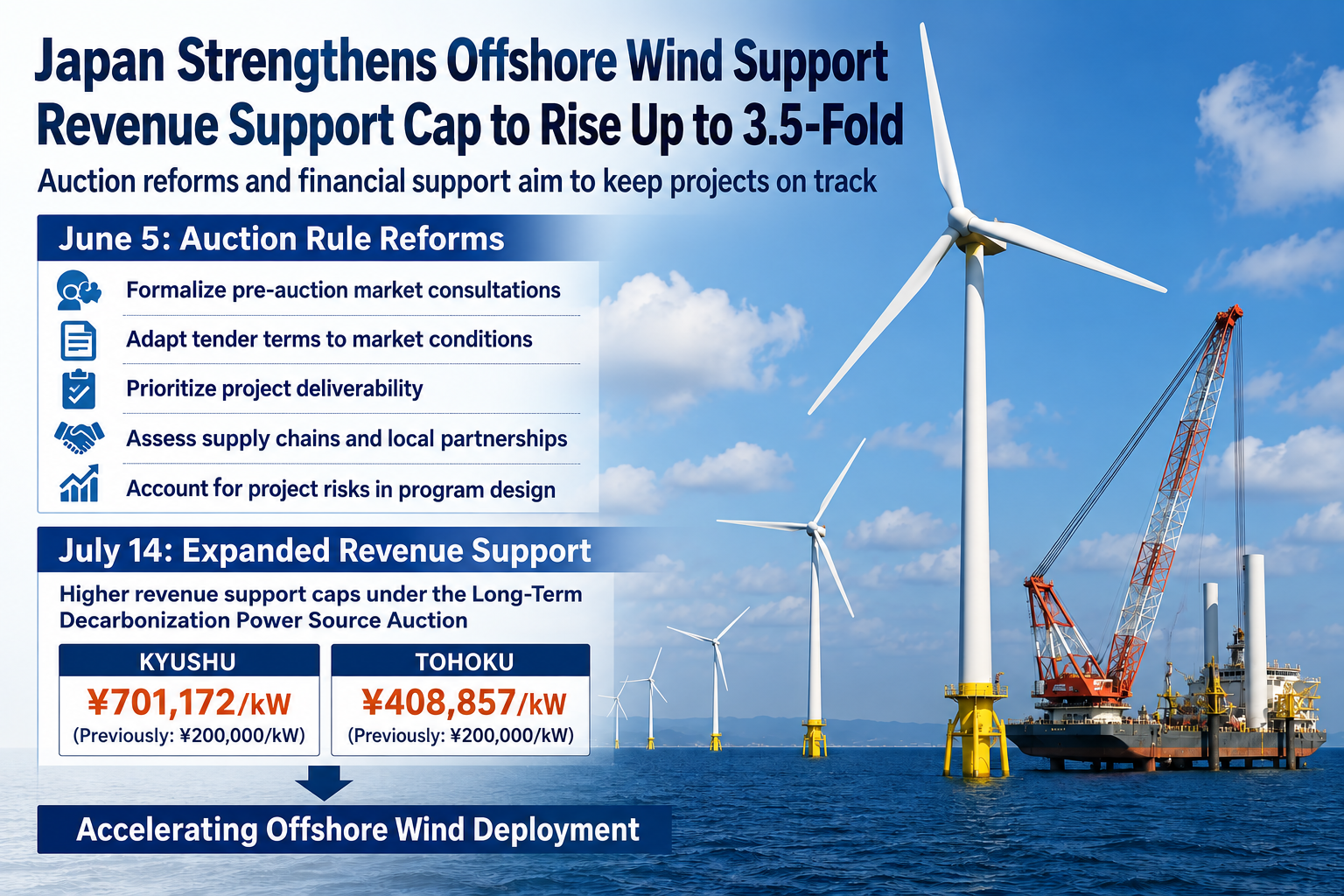
The government is also revising its offshore wind auction framework, with greater emphasis on the use of domestic components and supply chains in future tenders.
Other parts of the industry are building local capacity. JFE Engineering began domestic production of foundation components in February 2026 for an offshore wind project being developed by a JERA-led consortium off Akita Prefecture.
Investment hinges on a viable project pipeline
Japan’s push to develop an offshore wind supply chain continues to face uncertainty over the pace and commercial viability of new projects.
In 2025, Mitsubishi Corporation and its Chubu Electric Power group partners withdrew from offshore wind developments off Chiba and Akita prefectures, citing deteriorating economics amid higher turbine and material costs.
Norway’s Equinor announced its departure from the Japanese market in 2026. BP has also been reported to be considering an exit from the offshore wind project off Yuza, Yamagata Prefecture, which it is pursuing with Marubeni and other partners.
Those developments highlight the challenge facing equipment manufacturers: domestic industrial investment requires a dependable pipeline of projects that can move from auction awards to construction.
Vestas’ proposal signals continued interest in Japan, but its conditions underscore that government support alone will not determine the scale of its commitment. The next stage will depend on whether Japan can translate its offshore wind ambitions into commercially viable projects and sustained turbine orders.