Japan Targets Deepwater Floating Wind Trials to Build Technology for Asian Markets
2026/07/17
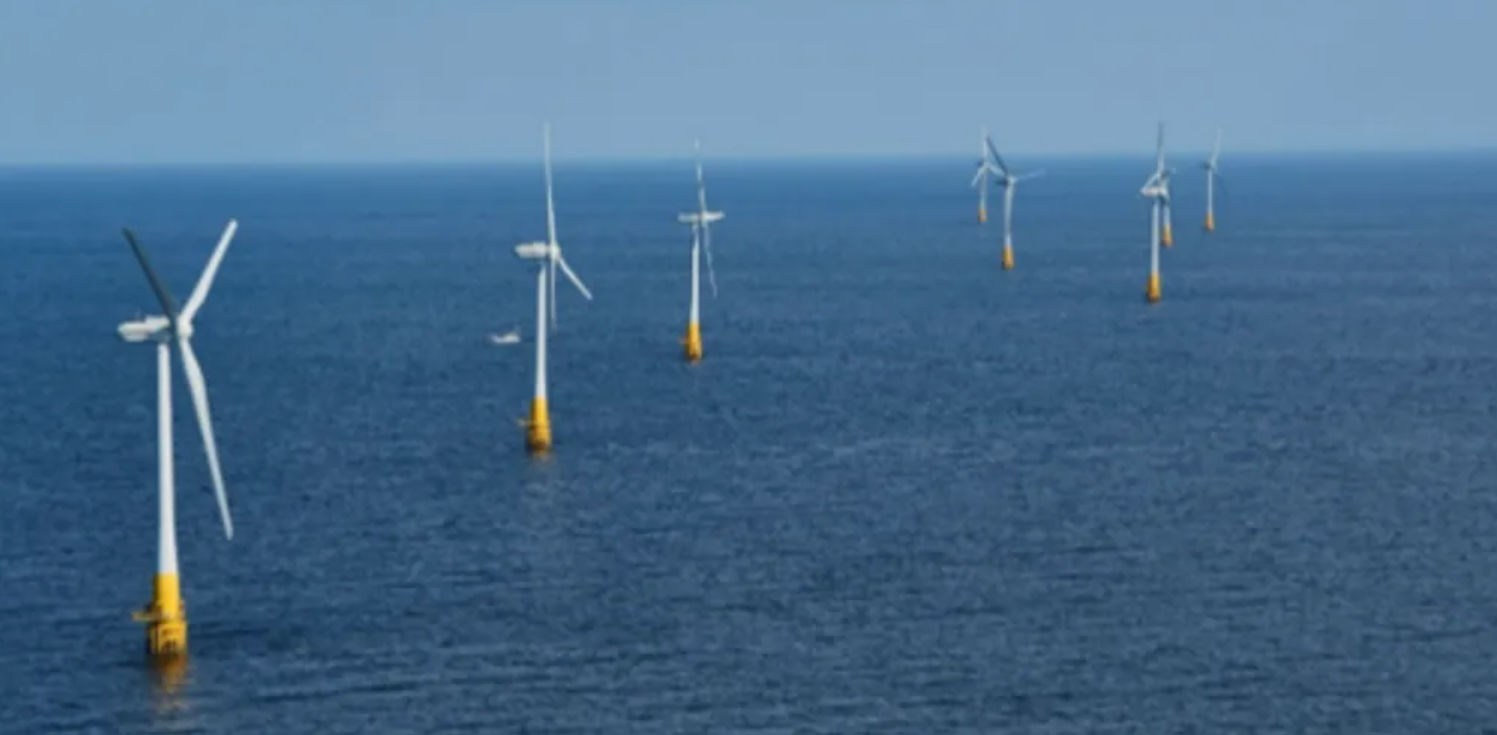
Photo: Goto Offshore Wind Farm
Japan has launched a search for a floating offshore wind demonstration site in challenging waters, seeking to develop technology for depths exceeding 500 meters and strengthen its position in Asia-Pacific markets.
The Ministry of Economy, Trade and Industry (METI) began inviting candidate sites from prefectural governments on July 15 through the New Energy and Industrial Technology Development Organization (NEDO).
The initiative will test floating wind technology in conditions that have seen few demonstrations worldwide, including deep water, rocky seabeds and high waves. Japan aims to use the findings to reduce costs, support mass production and pave the way for deployment in its exclusive economic zone (EEZ) and overseas.
The project forms part of a broader government push to have Japanese companies participate in 30 gigawatts of offshore wind development worldwide by 2040.
Testing Technology in Challenging Waters
Floating offshore wind demonstration projects are already underway off southern Akita Prefecture and off Tahara and Toyohashi in Aichi Prefecture. However, many of Japan’s most promising offshore wind areas present more demanding conditions, including deep water, steep seabed slopes, exposed bedrock and high waves.
Those challenges are also found across parts of the Asia-Pacific region, where floating wind development is expected to grow. METI hopes testing in such environments will help Japanese companies develop the technology, engineering expertise and installation methods needed to compete internationally.
Site Selection Planned by the End of 2026
Prefectural governments have until October 30 to submit information on candidate areas. The government aims to select one demonstration site by the end of 2026.
Eligible sites must include areas with water depths of at least 500 meters, have annual average wind speeds of at least 8.5 meters per second, and feature seabeds that are partly or entirely rocky. Agreement with fisheries stakeholders and vessel operators is also required.
To support future commercial development, applicants must demonstrate a reasonable prospect of securing roughly 50 square kilometers of adjacent waters within several years—enough to accommodate a 240-megawatt wind farm. The site must also be suitable for long-term use as a test center.
Planned trials include assessing turbine loads and fatigue in conditions with average wind speeds of around 10 meters per second, improving installation and operations and maintenance (O&M) in high waves, and testing anchoring methods for steep slopes and rocky seabeds.
Deepwater Moorings and Cables Among Key Priorities
The project will also provide an offshore testing ground for shared technologies being developed by FLOWRA, including deepwater mooring and anchoring systems and dynamic power cables.
Testing will assess both performance and the practical challenges of offshore installation.
Following site selection, METI plans to hold a competitive call for developers. The ministry intends to cover two-thirds of project costs through the Green Innovation Fund, with the demonstration project scheduled to begin in fiscal 2027 or later.
Expansion to Around 20 Turbines Under Consideration
Japan sees the initiative as a bridge to commercial deployment, with scope to expand beyond the one- or two-turbine projects that have characterized earlier demonstrations.
The selected area is expected to accommodate around 20 turbines in the future. The government is also considering a medium-scale demonstration project of approximately 300 MW over the longer term.
Larger projects would allow developers to evaluate the benefits of mass production and economies of scale, while helping strengthen the competitiveness of Japan’s domestic supply chain.
The government also envisions retaining the site as a permanent test center after the initial demonstration, supporting further technology evaluation and international research.
Permanent offshore test sites are already used in Europe to support technology development. In Japan, the need to coordinate access to marine areas for each individual demonstration has contributed to lengthy development timelines.
Building a Platform for Overseas Growth
Floating offshore wind could open up deepwater areas that are unsuitable for fixed-bottom turbines, making it a potentially important part of Japan’s future energy mix.
Japan is also expanding international cooperation, including a technology partnership framework launched with the United Kingdom in June.
Significant hurdles remain, however. Commercial deployment will require reliable mooring systems for very deep water, floating offshore substations, access to specialized construction vessels, and a workforce with advanced installation and maintenance skills.
Beyond testing equipment, the demonstration is intended to inform installation standards and international technical standards. A key question will be whether Japan can turn experience gained in its challenging coastal waters into commercially competitive technology—and a stronger role in shaping the global floating wind market.
Sources:
Agency for Natural Resources and Energy, METI;
Nikkei;
Wind Journal