Ocean Winds’ EFGL Floating Wind Farm Reaches Full Power, Marking Step Toward Commercial Deployment
2026/07/21
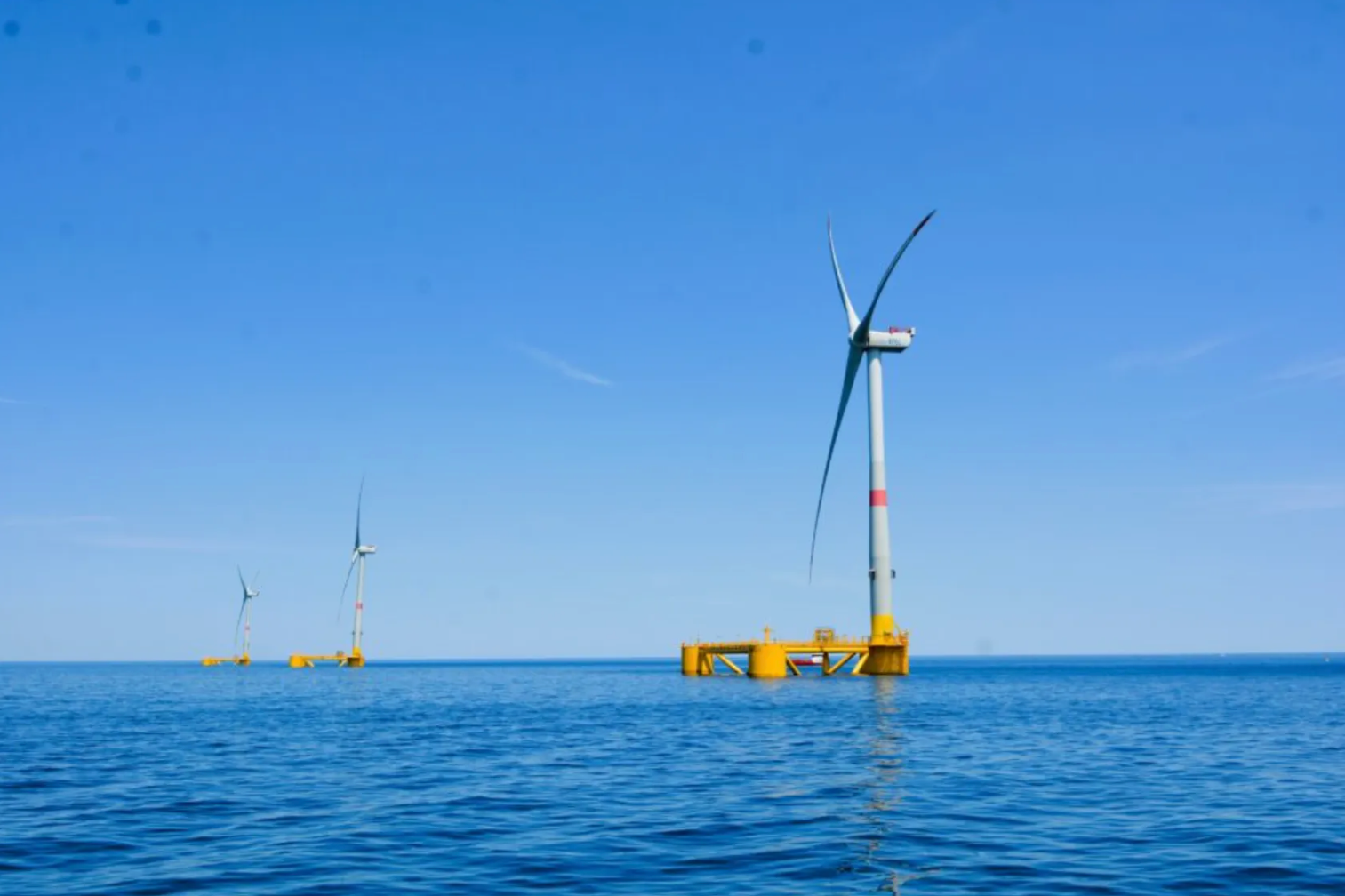
Photo: Ocean Winds
Ocean Winds has brought its 30 MW Éoliennes Flottantes du Golfe du Lion (EFGL) floating offshore wind farm to full power off southern France, marking a milestone in the industry’s transition from pilot projects to commercial-scale development.
Located off the Occitanie coast in the Mediterranean, EFGL is Ocean Winds’ first floating wind farm in France and its second operating floating wind project worldwide. The project is intended to build the technical expertise and operating experience needed for larger developments in deep waters.
Developed jointly with Banque des Territoires, the pilot wind farm comprises three 10 MW turbines mounted on semi-submersible floating foundations, approximately 16 kilometers offshore. Its construction and operation provide a testing ground for approaches that could support future commercial projects in the Mediterranean.
EFGL is expected to generate approximately 110,000 MWh of renewable electricity annually, equivalent to the annual electricity needs of around 50,000 people. The project has an anticipated operating life of 20 years.
Ocean Winds has established a dedicated operations and maintenance base at Port-La Nouvelle to oversee power production and maintenance. The facility supports more than 20 local workers, creating a long-term source of economic activity for the port city.
European Suppliers Play a Central Role
The project also highlights the role of local industry in building a floating offshore wind supply chain.
European companies account for 99% of EFGL’s direct suppliers, with French or France-based businesses representing 85%. Around 60% are small and medium-sized enterprises. This supplier base could help support subsequent commercial developments while retaining more of the industry’s economic benefits within the region.
Ocean Winds CEO Craig Windram said floating offshore wind would play an important role in the future energy mix of countries with deep coastal waters, including France. He described EFGL’s achievement as demonstrating the company’s ability to deliver complex floating projects safely and efficiently through cooperation with national, regional and local stakeholders.
Marc Hirt, Ocean Winds’ Country Manager for France, said the project showed that floating offshore wind had become an operating reality in the country. He also highlighted the expertise developed by French and European suppliers and the Mediterranean’s potential role in the industry’s next phase of growth.
Biodiversity Measures Integrated Into the Design
EFGL incorporates measures intended to support marine biodiversity alongside electricity generation.
These include Biohut® artificial marine habitats developed by local company Ecocean and integrated into the floating structures. Ocean Winds describes EFGL as the world’s first operating nature-inclusive floating wind farm.
The approach adds an environmental dimension to the project’s demonstration role, offering experience in how offshore renewable energy infrastructure can incorporate measures to support marine ecosystems.
A Foundation for Larger Mediterranean Projects
Much of the Mediterranean has water depths that constrain the use of conventional fixed-bottom offshore wind foundations. Floating technology offers a route to developing wind resources farther offshore and in deeper waters.
As floating foundations mature and port infrastructure, supply chains and policy frameworks develop, projects such as EFGL can help bridge the gap between technical demonstration and wider commercial deployment.
The wind farm’s significance therefore extends beyond its 30 MW capacity. Its combination of operational experience, regional suppliers, port-based maintenance and biodiversity measures provides a practical reference for developers planning larger floating wind farms.
Analysis: Lessons for Japan
For Japan, EFGL offers lessons that go beyond turbine and foundation technology.
As Japan explores floating offshore wind development and the use of its exclusive economic zone, the French project illustrates how port investment, local industry participation and environmental considerations can be incorporated into project planning from an early stage.
EFGL remains a pilot-scale development, and its performance alone will not establish the economics of much larger projects. Nevertheless, the experience gained from its construction and operation could help inform the next generation of floating offshore wind farms in Europe and Asia.
Source: Ocean Winds
This article was originally published by WindTAIWAN and is shared in collaboration with ENERGY NIPPON.